FIRST AND FOREMOST: DO NOT TAKE A TRUCK ONTO STORROW DRIVE.
If you are moving to Boston for school, there is one local word you should know before you rent a truck: “Storrowing.”
In Boston, “Storrowing” refers to an accident where a moving truck, box truck, or other over-height vehicle collides with a low overpass on Storrow Drive. These incidents are classic examples of bridge strikes, where vehicles hit low bridges or overpasses, often resulting in a peeled-back truck roof, a blocked roadway, damaged furniture, and a moving day disaster.
Storrow Drive is known for its low clearance overpasses, which are around 10 feet high, making it unsuitable for large trucks.
For locals, it is almost a seasonal tradition. For students and families moving into Boston for the first time, it is an expensive mistake.
What is Storrow Drive?
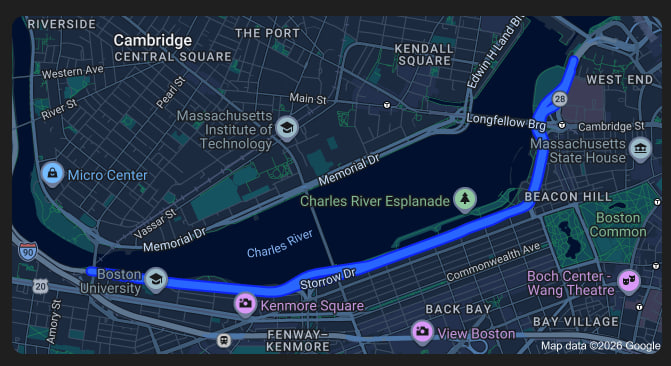
Storrow Drive is a major parkway that runs along the Charles River in Boston. Built as a parkway in 1951, it has always prohibited trucks and buses due to height limits. Named after James Jackson Storrow, the road features multiple low-clearance overpasses, making it a convenient route for passenger cars but not designed for trucks, moving vans, or buses. Boston and Massachusetts officials repeatedly warn drivers that moving trucks are not allowed on Storrow Drive because of low bridge clearances, low overpasses, and “cars only” restrictions.
What does “getting Storrowed” mean?
To get Storrowed means to drive an over-height truck onto Storrow Drive or a similar low-clearance parkway and hit a bridge.
In practice, this usually happens when:
- a driver follows standard GPS directions meant for passenger cars (Google Maps, Apple Maps, Waze),
- a student or parent is renting a truck without knowing Boston roads or being aware of the height limit risk,
- the driver misses or misunderstands low-clearance warning signs,
- or someone assumes “it will probably fit.”
Many drivers only realize the height limit risk after following GPS directions and encountering a low clearance. Most navigation apps like Google Maps and Waze do not account for vehicle height restrictions, often directing drivers of tall vehicles onto Storrow Drive. To avoid being Storrowed, drivers of tall vehicles are advised to use truck-specific GPS apps like SmartTruckRoute, TruckMap, or Hammer. The phenomenon commonly occurs as drivers follow GPS directions, believing that other vehicles ahead indicate a safe route into low-clearance areas.
It usually does not fit.
Massachusetts officials issue annual reminders before Boston-area move-in season because these crashes happen so often around late August and early September, when college students return to the city.
Why does this happen so often in Boston?
Boston is one of the easiest cities in America to get wrong if you are driving a rental truck for the first time, so following a detailed guide to relocating to Boston can help you prepare before move-in day, especially if you are moving from NYC to Boston and adjusting to a new city layout.
Storrow Drive, Soldiers Field Road, and Memorial Drive are notorious because they combine:
- low bridge clearances,
- parkway restrictions,
- fast-moving traffic,
- confusing city navigation,
- and thousands of out-of-town student moves and residents moving every year.
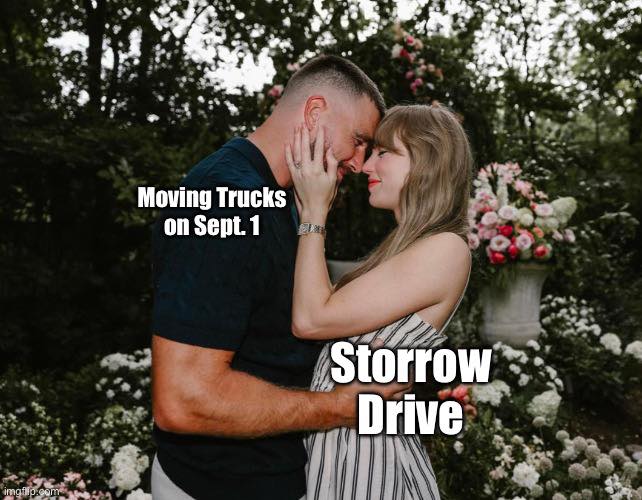
The peak season for being “Storrowed” occurs in late August and early September during Boston’s college student move-in week, often referred to as “Allston Christmas.” Incidents of Storrowing increase significantly during move-in weekends when many students and new residents rent moving trucks. Notably, accidents also occur in July, with several high-profile truck crashes on Storrow Drive reported in July 2021 and July 2020, showing that the problem persists throughout the summer. For many newcomers, getting ‘Storrowed’ has even become a rite of passage during move-in days.
Official guidance warns that the posted height limit on Storrow Drive is 10 feet, and state notices also say some nearby parkway clearances can be as low as 9 feet in some locations. That is a problem because many rental moving trucks are taller than that.
A quick history of Storrowing
Storrow Drive itself has been part of Boston since 1951, but over time it became famous for one very specific kind of moving-day mistake: over-height trucks striking low bridges, especially around September 1, when peak September 1st moving in Boston brings thousands of rental trucks onto city streets at once. The problem became so common that Bostonians created their own verb for it — “Storrowing.” Today, the term is part of local Boston culture, especially during college move-in season, when city and state agencies publish annual warnings telling students and drivers not to take moving trucks onto Storrow Drive.
Affected Institutions in Boston
Storrowing isn’t just a headache for drivers – it’s a challenge that affects a wide range of institutions and organizations across the Boston area. Every year, as college students and new residents descend on the city with box trucks and moving trucks, local universities, city agencies, and state departments brace for the chain reaction that can follow a single bridge strike.
Boston University, located right along the Charles River and Storrow Drive, is at the heart of the action during move-in day. The university, along with Northeastern University, Roxbury Community College, and other schools, regularly warns students about the dangers of driving large trucks on restricted river roads like Storrow Drive, Memorial Drive, and Soldiers Field Road. These routes have low bridges and height restrictions—some as low as nine feet – that can easily trap an unsuspecting driver. Despite repeated reminders, many drivers still find themselves stuck under a low clearance bridge, causing traffic backups and delays for everyone along the route.
To combat this recurring problem, the Massachusetts Department of Conservation and Recreation (DCR) and the Massachusetts State Police have ramped up their efforts, much like the broader safety and planning advice you’ll find in Boston moving tips and guides. They’ve installed new signage, including low-hanging signs, flashing lights, and message boards, to alert drivers to height restrictions before they reach a dangerous on ramp. The city also enforces parking and traffic restrictions on busy streets like Cambridge Street, Beacon Street, and Commonwealth Avenue during peak move-in periods, hoping to steer moving trucks away from risky areas and reduce the chance of a bridge strike.
But the impact of Storrowing goes beyond just students and universities. Local residents often face traffic jams and safety concerns when a truck gets stuck, and the Massachusetts Department of Transportation must inspect bridges after every incident to ensure they remain safe for cars and buses. The Department of Energy and Environmental Affairs is also involved, as reducing traffic congestion and preventing accidents is part of a broader push for sustainable transportation and environmental conservation in Boston.
Despite all these efforts, new signage, flashing lights, and strict enforcement – Storrowing remains a situation commonly referred to in local news each September. It’s a reminder of the unique challenges of moving in Boston, especially for new residents and college students unfamiliar with the city’s low bridges and height limit risks. By working together, institutions, agencies, and residents hope to make move-in day safer and smoother for everyone along the Charles River and throughout the city.
Can You Drive a U-Haul or Moving Truck on Storrow Drive?
No, and trying to do it can become an expensive mistake.
Many rental trucks are too tall for Boston’s low-clearance parkways. A standard GPS route may look fine for a car, but that does not mean it is safe for a truck. If you are driving a larger vehicle, you need a truck-safe route, not just the fastest route.
This is exactly where many students and parents run into trouble.
How students can avoid getting Storrowed
If you are moving into Boston for college, here is the simplest advice:
AGAIN – FIRST AND FOREMOST: DO NOT TAKE A TRUCK ONTO STORROW DRIVE.
Also avoid Soldiers Field Road and Memorial Drive if your vehicle is over-height or not permitted.
Before moving day:
Because this is the key idea: the headache doesn’t start after you hit the bridge — it starts the moment you decide, “We can handle it ourselves,” in an unfamiliar city without preparing for a last-minute move.
The issue isn’t the truck. The issue is how the move is organized.
Moving to Boston for College? Here Is the Safer Option
If you are a student, parent, or family planning a move into Greater Boston, the easiest way to avoid getting Storrowed is simple:
Boston college move-ins already come with enough stress, which is why many students rely on specialized Boston college moving services:
- tight move-in windows,
- difficult parking,
- narrow streets,
- traffic restrictions,
- elevator scheduling,
- lease timing issues,
- and unfamiliar routes.
The last thing you need is truck damage, a blocked road, or a ruined move-in day.
Working with experienced local movers is often the safer, easier option.
How Our Boston Moving Team Helps
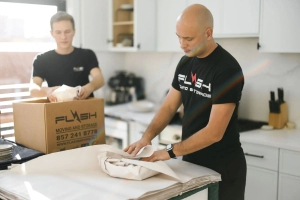
At Flash Moving & Storage, we help students move in and out of Boston without the stress of truck routing, low-clearance roads, parking confusion, or last-minute damage.
Our team knows:
- Boston neighborhoods,
- college move-in logistics,
- apartment and dorm access challenges,
- and the roads rental truck drivers should avoid.
Whether you are moving into an apartment, dorm, or temporary housing, our professional Boston apartment movers can help you:
- move without driving a rental truck through Boston,
- avoid route mistakes and move-in delays,
- protect your furniture and boxes,
- reduce stress for students and parents,
- and make move-in day faster and easier.
When Overnight Storage Helps
Sometimes the problem is not just the truck, it is the timing.
Students often arrive before a lease begins, move out before a new place is ready, or need a short-term solution between dorms, apartments, or semesters. In those situations, flexible moving and storage services in Boston can make the move much easier.
If your dates do not line up, our Overnight Storage service can help keep your belongings secure until you are ready to move in, and you can learn more about how overnight storage works during a Boston move.
You can also explore our Student Moving Services, our dedicated professional packing services in Boston, and our Local Moving options along with comprehensive local movers in Boston and nearby areas for additional support.
A Quick Move-In Checklist for Students
Before your Boston move, make sure you:
- confirm your lease or dorm move-in date,
- check whether your building has truck access,
- avoid restricted parkways,
- label boxes clearly,
- plan around Boston traffic and parking rules,
- and book movers early if you want to avoid last-minute stress, especially if you may need same-day or last-minute movers in Boston.
A little planning can save you from a very expensive mistake, and working with experienced local residential movers in Boston can help you avoid common pitfalls whether you are moving from Boston to Marblehead or planning a long-distance move from Boston to New York City.
Make Your Boston Move Easier
Boston move-ins are stressful enough without truck damage, traffic delays, and last-minute chaos. If you are moving this summer or fall, do not risk getting Storrowed.
Let our local Boston moving team handle the heavy lifting, the route planning, and the logistics, so you can move in safely and without the headache.
Call us today at 857 241 8778, email us at info@flashmoving.net
, or fill out our contact form to schedule your move.
You might also find our article intriguing:
Good Luck to You 🌊
FAQ
What does “Storrowed” mean in Boston?
It means a moving truck or other over-height vehicle hit a low overpass on Storrow Drive or a similar restricted parkway.
Why do trucks get Storrowed?
Usually because the driver follows standard GPS directions, misses warning signs, or does not realize the truck is too tall for the road.
Can college students drive rental trucks on Storrow Drive?
They should not. Storrow Drive is not truck-safe, and rental trucks can easily hit low-clearance bridges.
What roads should moving trucks avoid in Boston?
Storrow Drive, Memorial Drive, Soldiers Field Road, and other low-clearance or truck-restricted parkways should generally be avoided.
Is hiring local movers better than renting a truck?
For many Boston student moves, yes. Local movers understand truck-safe routes, access restrictions, parking rules, and move-in logistics.
When should I use overnight storage?
Overnight storage is helpful when your lease dates do not line up, your dorm is not ready, or you need a short-term solution between moves.

 (857) 241-8778
 email
email