Moving houseplants can be one of the most delicate parts of any relocation. Whether you’re moving with houseplants, preparing for moving houseplants in winter, or planning long-distance houseplant moving or even moving houseplants cross-country, the process requires specialized care, temperature control, and proper packing methods. Many plant lovers seek a trusted houseplant moving company to protect their collection, reduce transport shock, and guarantee safe delivery. In this complete guide, you’ll learn how to pack houseplants for moving, how to preserve soil moisture, how to protect fragile leaves, and how to ensure your indoor garden arrives healthy and thriving.

Why Moving Houseplants Is Challenging
Relocating live plants is far more complex than moving boxes or furniture. Moving houseplants involves biological, environmental, and transport-related risks. When moving with houseplants, owners must consider:
- Light sensitivity during transit
- Temperature changes, especially harmful when moving houseplants in winter
- Soil displacement and root stress
- Humidity control
- Risk of leaf breakage or stem damage
- Shock from long travel during long-distance houseplant moving
Each of these factors increases the importance of proper packing and choosing the right houseplant moving company that understands botanical care.
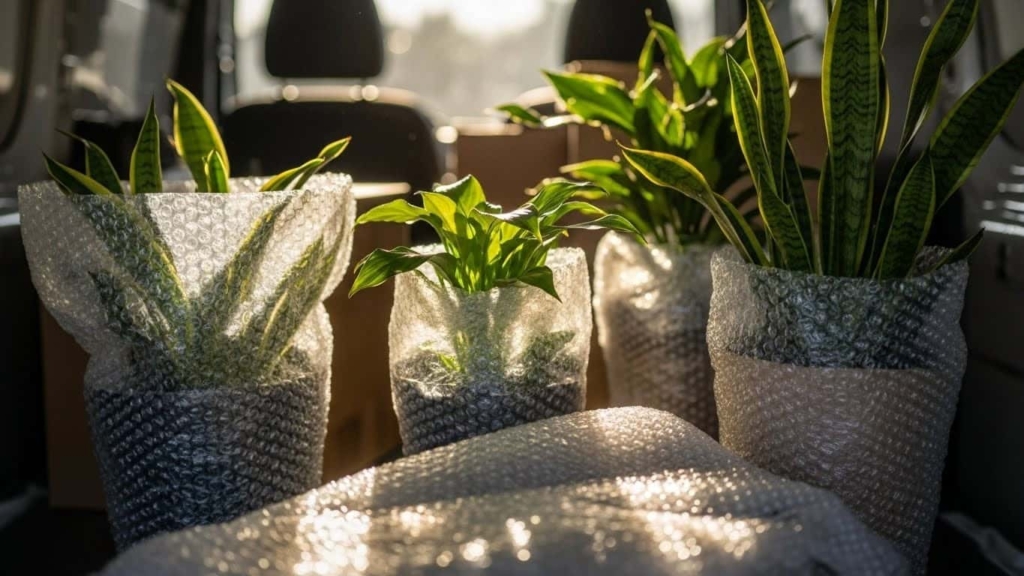
How to Pack Houseplants for Moving
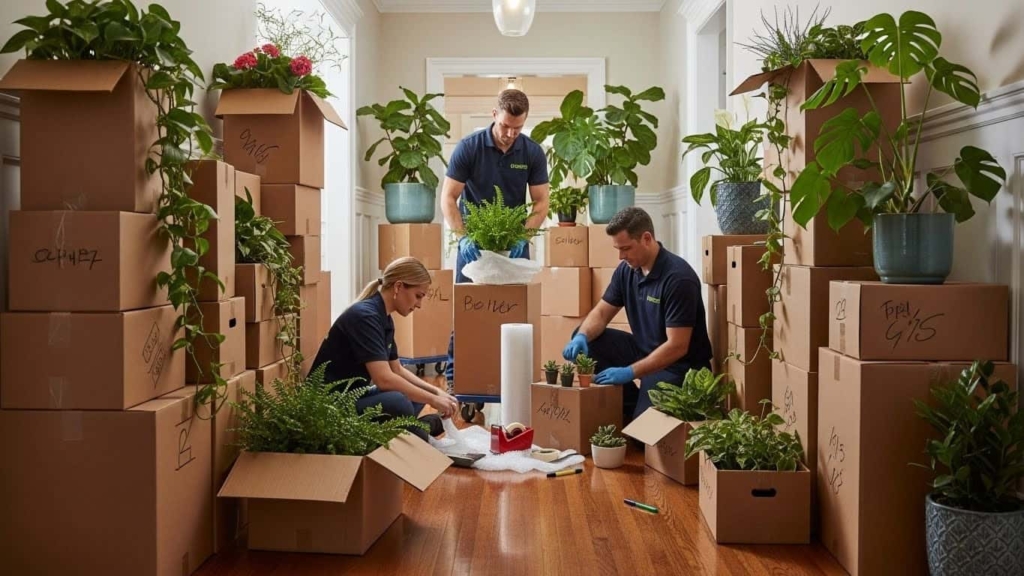
Knowing how to pack houseplants for moving is essential to keep them healthy throughout the move. Use these proven techniques used by top houseplant moving companies and horticulture professionals:
Water Plants 2–3 Days Before Moving
This prevents soggy soil, fungus growth, or water spillage during moving houseplants cross-country.
Use Breathable Plant Sleeves
Plastic suffocates roots and traps moisture. Choose breathable materials ideal for moving with houseplants.
Stabilize Pots With Packing Paper
This avoids soil disruption, especially for fragile or oversized plants in long-distance houseplant moving.
Protect Leaves With Kraft Paper Cones
A must-have method when moving houseplants in winter, as it protects leaves from cold air and breakage.
Transport Plants Upright
Label boxes “THIS SIDE UP – LIVE PLANTS” to maintain root stability.
Moving Houseplants in Winter
Cold climates can severely damage sensitive plants. When moving houseplants in winter, follow these essential steps:
- Wrap pots with thermal blankets
- Pre-warm the vehicle interior
- Avoid leaving plants in unheated trucks
- Use insulated boxes for tropical houseplants
- Choose faster transit routes when moving houseplants cross-country
Winter is the hardest season for moving houseplants, which is why many homeowners prefer a specialized houseplant moving company with climate-controlled trucks.
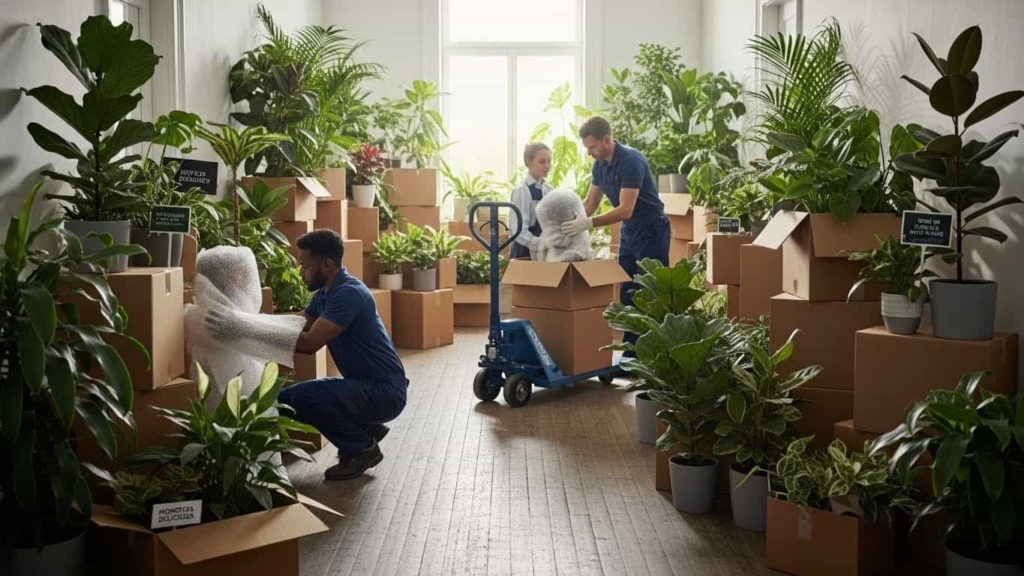
Why Hire a Professional Houseplant Moving Company?
A professional houseplant moving company provides expertise that DIY moving often lacks. Benefits include:
- Climate-controlled transport
- Properly moving houseplant packing materials
- Expertise with large, rare, or delicate plants
- Safe handling of oversized pots and decorative containers
- Guaranteed safety for long-distance houseplant moving
Professionals offer the highest success rate when moving houseplants, especially valuable collections or exotic species.
Long Distance Houseplant Moving & Cross-Country Relocation
When planning long-distance houseplant moving or moving houseplants cross-country, consider:
- Extended temperature exposure
- Light control inside transport vehicles
- Humidity management
- Securing heavy ceramic pots
- Preventing soil dehydration
- Minimizing shock during multi-day travel
Cross-country relocation requires precise packing and expert transport methods to keep plants in thriving condition.

Comprehensive Checklist for Moving Houseplants
Here is your complete moving houseplants checklist to ensure a stress-free relocation:
- Water plants 2–3 days before moving
- Remove pests and prune dead leaves
- Secure pots with paper or bubble wrap
- Use breathable wrapping for foliage
- Pack in insulated boxes during winter
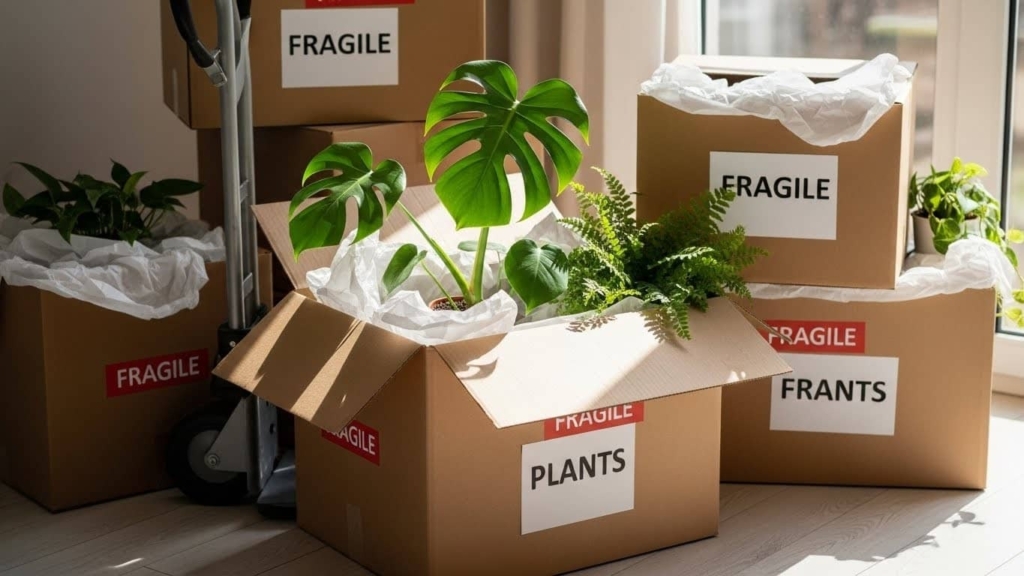
- Label all containers: “LIVE PLANTS.”
- Schedule climate-controlled transport for long-distance houseplant moving
- Unpack and acclimate plants immediately upon arrival
Following this checklist protects your indoor garden during any type of move — local, long-distance, or cross-country.
Your Stress-Free Houseplant Move Starts Here
Moving houseplants doesn’t have to be stressful. With the right preparation, proven packing techniques, and a trusted houseplant moving company, your indoor jungle will arrive healthy and thriving. Whether you’re moving with houseplants, preparing for moving houseplants in winter, or planning moving houseplants cross country, expert help ensures a smooth and safe relocation.
Ready to Move Your Houseplants Safely?
Get your FREE quote today from a trusted plant-safe moving team.
Protect your indoor garden with the best moving with houseplants solutions.

FAQ – Moving Houseplants
How do I prepare houseplants before moving?
Water them lightly, prune dead leaves, check for pests, and stabilize the soil before moving houseplants.
What is the best method for moving houseplants in winter?
Use insulated boxes, warm vehicles, and protective coverings to avoid cold shock when moving houseplants in winter.
Can houseplants survive a long-distance move?
Yes — with proper packing and a trusted houseplant moving company, long-distance houseplant moving is safe and reliable.
What’s the safest way to pack plants for a move?
Breathable wraps, stabilized pots, and upright transport ensure the safest conditions when moving houseplants.
Do movers handle large or fragile houseplants?
Specialized houseplant moving companies offer handling for oversized, rare, or fragile indoor plants.
You might also find our article intriguing:
Good Luck to You 🌊

 (857) 241-8778
 email
email